



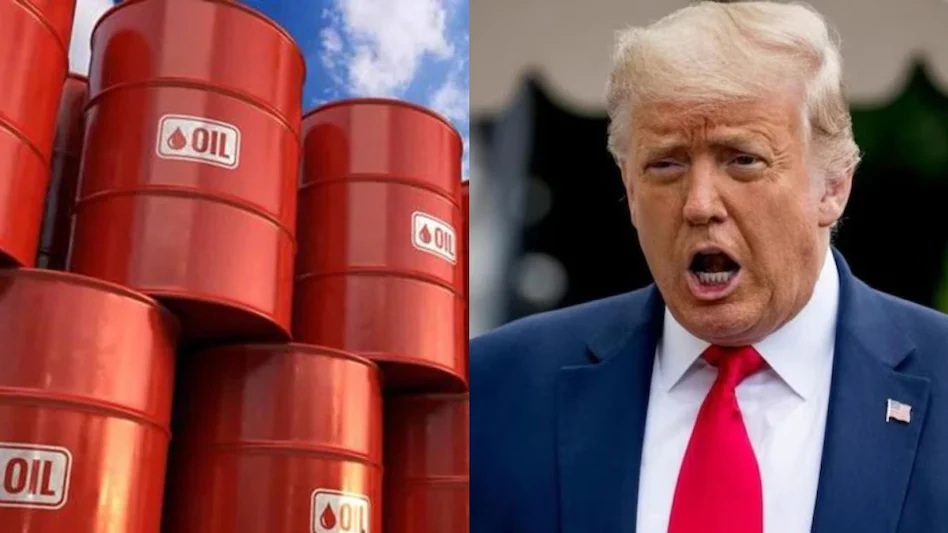

Kathmandu. Global tensions have once again reached their peak. Despite 21 hours of talks between the US and Iran in Islamabad, peace talks have failed. Trump is once again visibly angry and the US Central Command (CENTCOM) under his leadership has announced the start of blockades on Iranian ports. Meanwhile, crude oil prices have rebounded after a two-week ceasefire.
In the international market, the price of crude oil rose more than 8 percent on Monday to more than $ 100 a barrel. If the war between the two countries escalates, the price could rise further. This increases the risk of global inflation.



Announcement of blockade, surge in crude oil prices
}
According to the AP report, the US-Iran talks in Islamabad failed to reach any conclusion. U.S. President J.D. Vance described it as “very bad” for Iran. This led to a strong retaliation from Iran. The sudden escalation of tensions between the two countries had a direct impact on the price of crude oil. Oil prices have risen sharply since the United States announced a blockade of Iranian ports from Monday.
The price of WTI crude oil rose 8% to $104.24 a barrel. Brent crude futures, the global oil benchmark, rose more than 7 percent to $102.29. The price of natural gas also rose nearly 2 percent to $2.684.
Brent crude oil prices fluctuated significantly during the Strait of Hormuz during the Iran war. Brent crude, which was trading at around $70 a barrel at the end of February, just before the war, has risen to $119 since the war began. However, after the announcement of the US-Iran ceasefire, the price of Brent crude oil fell again last week and the price of Brent crude oil for delivery fell to $95 a barrel.
Hormuzma stress extreme
}
Tensions over the Iranian-controlled Hormuz have reached a peak since the failure of peace talks in Pakistan. Because this sea route controls the movement of 20 percent of the world’s oil needs. The disruption has recently led to a global oil and gas crisis in several countries.
Simply put, about one-fifth of the world’s crude oil trade passes through Hormuz every day. Saudi Arabia, Iraq, the United Arab Emirates, Kuwait and Iran are all major oil exporters. However, since the ceasefire was declared, the movement of ships on this route has been limited. Marine trackers indicate that more than 40 commercial vessels passed through the route during this period.
What is Trump’s plan now?
The U.S. Central Command said it would impose an impartial embargo on ships entering or departing Iranian ports and coasts. However, it will still allow ships sailing between non-Iranian ports to pass through Hormuz.
Meanwhile, a Wall Street Journal report has revealed that President Donald Trump is considering relaunching a major bombing operation against Iran after diplomatic talks between the two countries failed. –Agency