




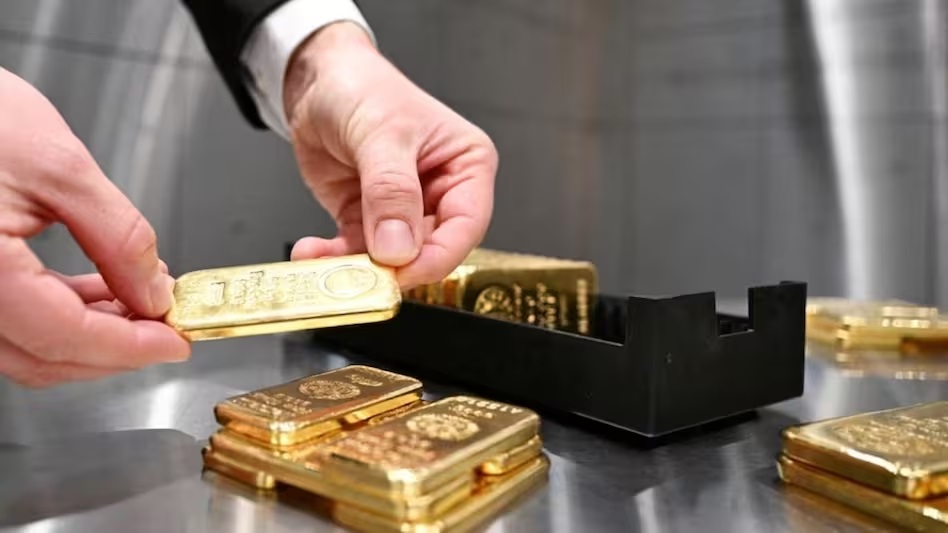

Kathmandu. The rising price of gold shows no signs of stopping. It continues to grow. Large investors and general buyers have been contributing to the rise in the price of gold.
Central banks around the world are buying large quantities of gold. Despite high prices, monetary authorities around the world are also buying gold. This shows that gold is considered an essential safe asset when economic and geopolitical uncertainty increases.



India and China have also been contributing significantly to the rising price of gold. Both countries have reduced their investments in U.S. Treasury bonds and increased their purchases of gold. This is not just a temporary portfolio change, but a major change in their reserve management strategy.
RBI’s strategic move
}
The changes in India’s foreign exchange reserves are the result of the Reserve Bank of India’s (RBI) deliberate policy of moving away from US government debt and investing in other countries. Data from the US Treasury Department shows that by the end of October 2025, India’s investment in US Treasuries has fallen from $200 billion to about $190 billion. That’s a significant drop of $50.7 billion from the previous year.
Meanwhile, the RBI took a completely opposite approach to gold. According to the RBI data, the central bank’s gold reserves have reached 880.18 metric tonnes by the end of October 2025. It was 866.8 metric tons last year. This growth comes at a time when India’s total foreign exchange reserves remain relatively stable at around $685 billion. This suggests that this is not just an overall increase in reserves but an increase in the share of gold within the reserves.
Gold is a major ingredient
This change is clearly reflected in the increasing share of gold in India’s foreign exchange reserves. Gold represented 13.6% of the RBI’s foreign exchange reserves as of September 26. This was significantly higher than the previous year’s 9.3%. At that time, the total reserves were at record levels. This rising ratio of gold indicates that gold is not just a small asset but has now become a key component of India’s reserve strategy.
What is the situation in China and other countries?
Countries such as the UK, Belgium, Japan, France, Canada and the UAE have increased their investment in US Treasuries. Japan is the largest foreign holder with $1.2 trillion. Then there are the UK and China. In contrast, China, Brazil, India, Hong Kong and Saudi Arabia have all scaled back their investments over the years.
China’s reduction in its risk to U.S. Treasuries is even more significant and politically sensitive. China’s investment in U.S. government debt fell to $682.6 billion in November 2025. It was $688.7 billion in October. This is the lowest level since 2008, reflecting a long and steady exodus from U.S. debt.
According to official media, China had the world’s largest foreign exchange reserves at the end of December 2025. That’s $3.3579 trillion. –agency