




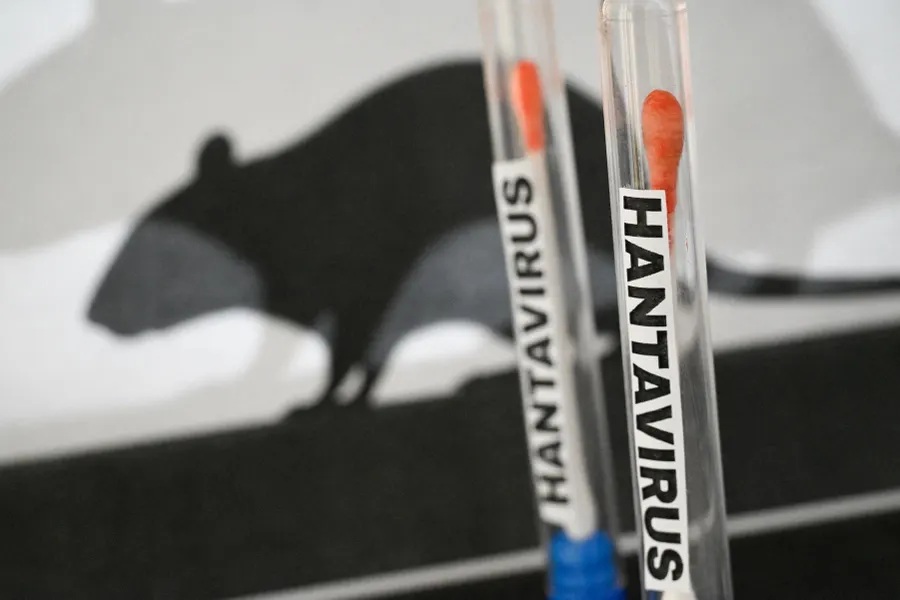

Kathmandu. Hantavirus is a type of virus. It is mainly transmitted to humans by rats and similar animals.
Recently, there was an outbreak of hantavirus on a cruise ship from Argentina to Cape Verde. Due to which 3 people died and one case was confirmed. The World Health Organization (WHO) has said that the risk to people is currently low.



Why is the fear of hantavirus spreading?
The news of the death of 3 people on the cruise ship has spread fear worldwide. People are worried whether the virus is now spreading from one person to another. It is usually spread through the urine, saliva, or feces of mice. However, it can be very dangerous if it spreads from one person to another.
Symptoms of hantavirus
}
It is initially similar to the common flu—fever, body aches, headache, abdominal pain and mild cough. Some people do not experience any symptoms. In severe cases, it affects the kidneys. It is difficult to breathe. Hantavirus spreads rapidly in the lungs and can block the trachea.
How dangerous is hantavirus than the common flu?
It is much more dangerous than the common flu. In Asia and Europe, the mortality rate of hantavirus is as high as 14%. In the United States, the death rate may be more than 40%. Although flu death is rare, hantavirus can cause serious damage to the lungs and kidneys.
Impact on the world
}
This virus has been seen all over the world. Thousands of cases are reported annually in China, Russia and South Korea. Hundreds of cases are reported annually in the US, Finland and France. The infection lasts throughout the year.
How does this virus spread?
It is mainly caused by the urine, faeces of rats, or through direct contact with them. It can also enter the lungs through airborne particles (aerosols). It can also be spread by bites or scratches. Most of the cases are in people who work in forests, fields or old buildings.
Does it spread from person to person?
It doesn’t usually spread. Only a strain called the Andes virus can spread from one person to another. However, it requires long-term and close contact. In the case of the cruise ship, it is unclear whether it spread from person to person or if everyone was infected by different mice.
What is the treatment?
There is no specific treatment. Doctors treat the symptoms. Critically ill patients receive oxygen and supportive care in the ICU. The sooner treatment begins, the better the recovery.
Who is most at risk?
The elderly, immunocompromised, those with pre-existing medical conditions, and those working in forests and farms (such as farmers and foresters) are most at risk.
What precautions should be taken in the future?
Stay away from rat-infested areas. Keep your home and ships clean. Wear a mask and gloves when cleaning rat droplets. If someone gets sick in an enclosed place, such as a cruise ship, isolate immediately.
Hantavirus looks like a normal flu. However, it can be very dangerous. The case of cruise ships is worrisome because the situation could change if human-to-human transmission is confirmed. At present, the WHO has said that the risk to the general public is low. However, it is advisable to be cautious. –Agency