




Kathmandu. Amid growing gloom in the stock market, regulators have started writing to stockbrokers to provide details of their transactions, including three generations of those who have placed orders to buy and buy large shares.
Those who want to buy big shares by taking risks in the market are getting discouraged after big orders were placed and buyers were tightened to bring the stock market to the real ground. After the formation of this government, the share trading in the market has slowed down from Rs 23 billion to around Rs 3 billion per day. As a result, the government company, NEPSE, has been struggling to meet its daily expenses while most of the share brokers have incurred losses. There has also been a huge drop in the revenue earned by the government.



“You should not place a big buy order, you will get a letter from the regulatory body asking you to give details of three generations of big shares and 1 year and 6 months,” said a source associated with the stock broker.
After the regulatory body tightened the purchase, brokers have stopped their customers from giving limits and buying large shares. As a result, the volume of the market is decreasing. Even those who have invested their investment resources and money in banks are afraid to place large purchase orders and buy shares for fear of being scrutinized. Brokers say that the number of investors who remain silent now is increasing for fear that even if they are not at fault, they will be on the radar of the regulator.
With the trend of creating fear in the market, stock brokers have started pressuring the investors with outstanding dues to settle the account immediately. The tendency of brokers to facilitate investors by adjusting accounts from their own sources has stopped, while the trend of selling shares to settle the balance instead of saving money to buy shares has increased.
“The Securities Board of Nepal (SEBON) is monitoring the situation. So don’t buy now,” the broker’s staff has been telling customers.
It is natural for the broker to complain that the seller of the shares has not received the money and take action against him. It can’t be said otherwise. “But the fact that brokers are limiting their own risk and responsibility and putting those with money under scrutiny when they buy large shares shows that the regulators are going to increase terror,” said one investor.
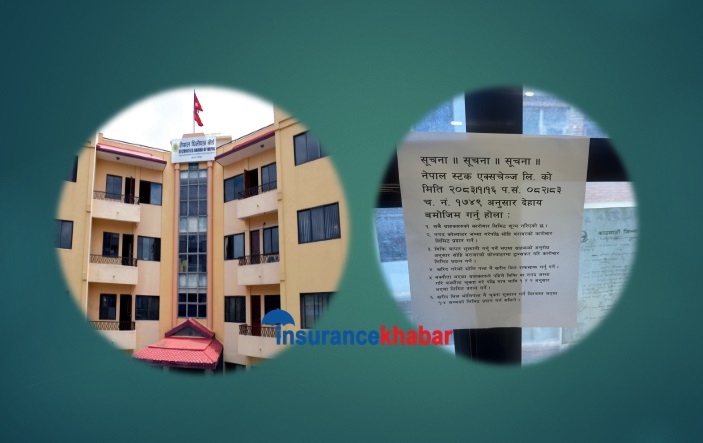
The old rule is that you have to pay 25 percent advance to buy shares. Most brokers have already been stricting their clients. It is said that the risk of capital flight is increasing as even those who have their own money are afraid to buy large stocks. NEPSE’s recent public notice has increased the pressure on the contrary.
Some investors buy shares from a broker by paying their money in advance, and after coming to that account, they deposit the remaining money with the broker by keeping it in the bank. The current crackdown has completely stopped it.
Long-term investors are disappointed in the stock market even as the banks have accumulated the highest liquidity in history and the interest rate is also at an all-time low and the share mortgage loan is below 5 percent. In the past, the stock market used to rise when interest rates were cheaper and liquidity increased, but this time the opposite result has been seen. “Tomorrow, if there is a contraction in liquidity for some reason and interest rates start rising, what will happen?” asks investors who have been immersed in fundamental companies for 8 years.
Regulatory agencies, however, say that there is no need to panic when the market is controlled and the real transactions are done. There is a misconception among the regulatory bodies that the less transaction is made, the better it is for the purity of the market. It is said that the government side is also happy that the distortion in the stock market has started to be controlled.
Spokesperson of the Securities Board of Nepal (SEBON) Niranjaya Ghimire said that the Securities Board of Nepal (SEBON) has been monitoring the market in real time. “The Securities Board of Nepal (SEBON) has been conducting real-time monitoring during the transaction time for a long time,” he said, adding, “The Securities Board of Nepal (SEBON) has been asking for such transaction details from NEPSE or brokers in case of any suspicious activity during the transaction period.” ’
Ghimire said he was not aware of reports that regulators were tightening the market in recent times. “We have to carry out regular monitoring and inspection,” he said, adding, “I don’t have any information about the new circular being issued to impose stricter measures.” ’
Regular regulation and monitoring in the market should be taken naturally, but the act of suppressing sales and reducing demand at a time when demand is to create panic has increased confusion and uncertainty as the end of July approaches. Is the wrong approach adopted to control credit transactions and malpractices helping capital flight? Questions are being raised.