




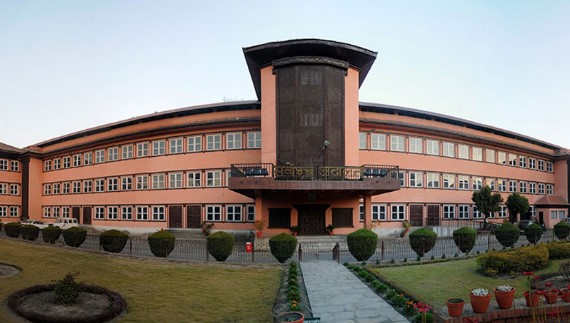

Kathmandu. Kathmandu: The constitutional bench of the Supreme Court has upheld the Nepal Rastra Bank’s decision to blacklist not only the board of directors of companies that have not paid the loans of banks and financial institutions but also the fundamental shareholders (people having 15 percent or more shares).
Ruling on the writ petition filed by advocate Mandira Adhikari, a constitutional bench led by Chief Justice Prakash Man Singh Raut issued a historic verdict that the influential shareholders behind the corporate veil can be held accountable to maintain financial discipline despite the company having a separate legal entity.



Earlier, the Supreme Court had set a similar precedent against the proprietors of Unity Assurance Company, which has its headquarters in Jawalakhel and embezzled billions of rupees from the general public through illegal cash transactions across the country.
What was the controversy and claim?
Clause 9 (3) (f) of the Integrated Directive of Nepal Rastra Bank, 2081 BS states that if any company fails to repay the loan, the directors of that company and the shareholders having 15 percent or more shares will also be blacklisted.
The petitioner had contended that the provision violated the principle of limited liability of the company, the shareholders could not be held personally liable and were contrary to Article 17 (freedom of profession and profession) and Article 18 (right to equality) of the Constitution.
The Supreme Court dismissed the writ petition and presented the following legal and logical grounds regarding the liability of the basic shareholders:
}
The court cited the historical precedent of Salomon v. Salomon and held that if a bank’s debt is misused by using the company’s structure as a shield even though a company has its own legal entity, the court can penetrate the cover of the company and hold the real controller, i.e., the primary shareholder, responsible. “Individuals with 15 per cent or more shares are not ordinary investors. They have the potential to significantly influence the company’s decision-making. According to Sections 30 (3), 82 (3) and 121 of the Companies Act, 2063, a person holding 10 percent share can stop the special offer.
Protection of Public Deposits
}
Since bank money is the private property of the shareholders and not the deposits of the public, the special law on banks and financial institutions can override normal company law to protect it.
The court has made it clear that blacklisting does not mean a criminal punishment i.e. jail or fine. It is only an administrative or regulatory measure. This protects the integrity of the financial system and prevents bad borrowers from taking out loans again.
Clause 79 of the Rastra Bank Act, 2058 BS has given full authority to the NRB to give necessary directions to the banks and financial institutions. Under which the blacklist directive has been issued. Article 17 (2) (f) of the Constitution of Nepal does not impair the right to profession and profession and the state can impose reasonable restrictions in the public interest.
Apart from this, only the person who signed the cheque dishonour is responsible, but in the case of bank loans, all the key people running the company will be responsible.
This decision of the Supreme Court has dealt a big blow to the elite borrowers who take loans from banks and sink the company but are trying to escape personally. It has paved the way for maintaining financial discipline and good governance in Nepal’s banking sector.