



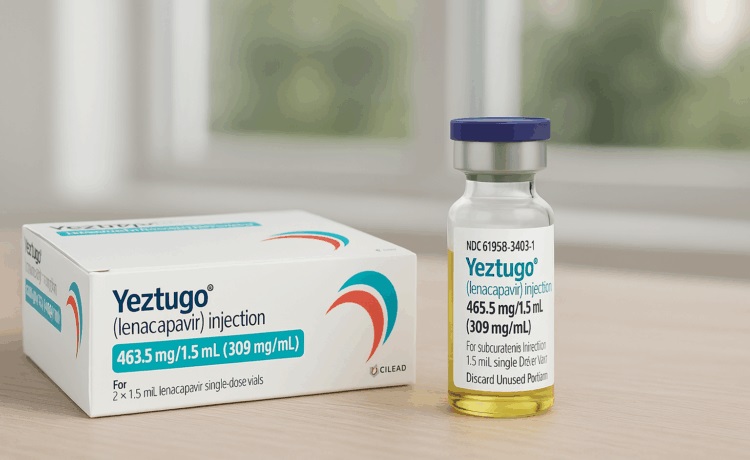

Kathmandu. The ‘Yeztugo’ vaccine for HIV prevention is gaining popularity. The vaccine, produced by Gilead Sciences, should be administered twice a year. However, a lack of insurance and reimbursement issues have hindered widespread access to the vaccine.
Lenapavir’s brand name, Yeztugo, was approved by the U.S. Food and Drug Administration as the first HIV pre-exposure prophylaxis option in June 2025. Which provides 6 months of protection. This twice-annual drug is for adults and adolescents at risk of sexually transmitted HIV-1 infection.


This approval marks a major scientific milestone. Clinical data from the Objective 1 and Objective 2 trials demonstrated strong protection against HIV infection. The CDC reported that the vaccine showed 100 per cent efficacy in women at 52 weeks and 96 per cent efficacy in trials. Most of the surveys were made up of men.
Initial Adoption & Insurance Challenge
Early prescription data shows a growing interest in the vaccine. In the first quarter of 2026, more than 9,000 prescriptions were written for the Eztugo injection, according to Reuters. While this is a good start, it still lags far behind well-known HIV pre-exposure prophylaxis options such as Descovy. It recorded about 461,000 prescriptions, and the two-month injectable HIV pre-exposure prophylaxis option Apritide recorded nearly 32,000 prescriptions over the same period.
Despite this initial concern, the adoption of Yestugo has highlighted a major challenge in the U.S. healthcare system. Access to this depends to a large extent on how insurance companies and pharmacy benefit managers (PBMs) classify and reimburse medications.
According to a Gilead report, more than 90 percent of insurance companies have disclosed how Yeztugo is covered. However, coverage doesn’t always mean easy access. Some plans treat the drug as a medical benefit rather than a pharmacy benefit. That means clinics may have to buy drugs first and receive reimbursements later. This creates financial pressure on smaller clinics with limited cash flow.
Price & Coverage Issue
Price is still another major issue. According to Reuters, Yestugo’s U.S. list price is more than $14,000 per vaccine. That’s more than $28,000 a year. In comparison, generic daily use HIC prevention pills are significantly cheaper. This price difference has alarmed some insurance companies and PBAs. However, there is a possibility of higher intake of yeshtungo, especially among patients who struggle to take their daily medication.
CVS Caremark, one of the largest pharmacy benefit managers in the U.S., was initially hesitant to cover YestuGo because of clinical, regulatory and financial concerns. However, as of January 2026, CVS added the drug to its commercial insurance coverage list. This increased the total insurance coverage to more than 80 percent.
Despite this progress, patient access is still not consistent. Some patients face preapproval requirements, high copayments, deductibles, or delays, depending on their insurance company. In addition, cost-effective coverage without standards is still uncertain. That’s because the U.S. Preventive Services recommendation for the pre-exposure prophylaxis option has not yet been updated to specifically include the THS.
Patient Support & Insurance Programs
For uninsured or underinsured patients, Gilead provides support through its Advance Access program. According to the company, eligible commercially insured patients can avail the facility at zero cost only through its co-payment savings program. More eligible patients can receive select Gilead medications at no charge through the Patient Assistance Initiative.
Difficult balance for insurance companies
}
Yeztugo presents a difficult balance for insurance companies. The drug may improve adherence and reduce HIV-related healthcare costs in the future. However, its high initial cost and complex administration model raise short-term budget and reimbursement concerns.
Public Health Impact{
}
The price is high for public health officials. Twice a year, these vaccines can help reach people who are unable or unwilling to continue taking daily oral medications. However, until insurance coverage is more uniform and clinics are properly funded, the drug’s real-world impact may not deliver on its clinical promise.
Yeztugo can become an essential tool in HIV prevention. But its success will depend not only on scientific innovation but also on whether insurance companies, PBMs, healthcare providers and public health programs can work together to translate this success into affordable and practical access for vulnerable populations. –Agency