



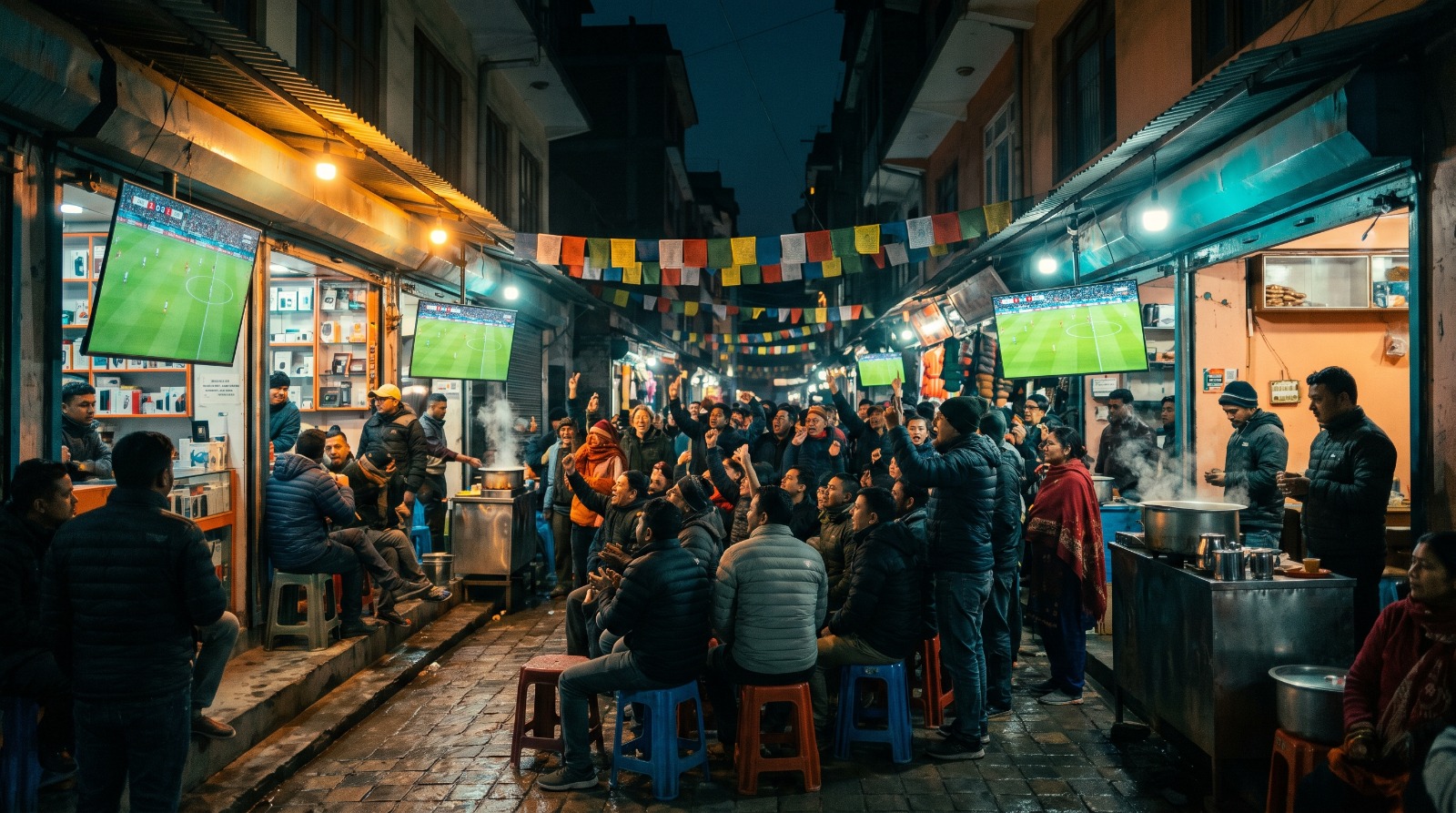

Kathmandu. Most of you don’t sleep tonight. Your neighbors, friends, office colleagues don’t sleep. The final match of the FIFA World Cup 2026 between Spain and Argentina is going to be as busy as the crowd of the day. The game is the same, but there are dozens of areas it touches. From restaurants to meat markets, from mobile wallets to television screens.
The kick-off is scheduled to be held at 12:45 am in Nepal and it is estimated that around Rs 1.5 billion to Rs 2 billion will be traded in the market on a single day. Let’s take a closer look at what’s really happening in Nepal’s economy this one night.


Midnight mess charges up to Rs 35,000
}
Lounges, clubs and sports restaurants are taking advantage of the fact that the game starts at midnight and the lounges, which are open all night, are more than the family feasts in the evening. Tables have been booked weeks in advance at popular places in Thamel, Jhamsikhel, Durbar Marg and Lakeside of Pokhara. The minimum requirement is Rs 10,000 to Rs 35,000 to keep a table reserved just for watching the game. Apart from this, most of the big cinema halls (multiplexes and banquet halls) have made arrangements for mass screenings by charging tickets from Rs 500 to Rs 1,500 per seat. Snacks and beverages are compulsorily included with the ticket.
Liquor and meat market quadrupled activity
}
The direct impact of this game has been seen in Nepal’s production and supply chain. For big brewers and soft drink companies like Gorkha Brewery, Raj Brewery, it has been the highest sales day of the quarter. According to Kalimati Vegetable Market and Big Meat Processing Centres, the demand for raw materials like chicken, chips and other cetan raw materials has increased by 30 to 40 percent in the last 48 hours. Restaurants have already stocked up on large quantities of ingredients by simplifying their menus to serve the midnight crowd faster.
Own economy of those who watch from home
}
Since it is midnight and Monday is a working day, a large number of people are preparing to watch the final from home. It has energized Nepal’s online marketplace and fast home delivery services. Digital food delivery apps have come up with a special ‘combo offer’ targeting midnight. As a result, the average price of each order has increased.
On the other hand, from New Road and Ranjana street clothing stores to online stores, fans have flocked to buy Lionel Messi’s Argentina and Spain jerseys. This has led to a sudden boom in the local printing and textile import business.
Most Expensive Sports Broadcast in Nepal’s History
While the open market business is booming, the biggest financial risk in the history of broadcasting in Nepal is also being played on its backend. Ace Pro Media has bought the exclusive broadcast rights of this year’s FIFA World Cup for about 272.5 million rupees ($ 1.77 million). The total cost of the project comes to Rs 50 crore, including satellite connection, technical management, distribution commission and government taxes. This is the biggest investment in the history of Nepal’s media and sports.
Advertising decreased, burden directly into the viewer’s pocket {
}
In previous years, a large part of the cost of the World Cup came from commercial advertising. However, due to the current economic slowdown in Nepal, this time the overall advertising market has been limited to 5 to 8 crores. This means that a broadcaster can only raise 15 to 16 percent of its total investment from advertising. To make up for the huge loss of the remaining Rs 420 million, the company has to rely entirely on pay-per-view fees.
Himalaya Sports HD is selling special digital passes for television viewing at Rs 999 and DGO app for mobile phones from Rs 549 to Rs 799. Even assuming an average net income of Rs. 750-800 per viewer after deducting taxes and commission, to secure this investment of Rs. 500 million and reach the point of profit and loss, you need at least more than 420,000 fully paid digital customers in Nepal. If many people opt for cheap mobile passes, then this number should go up to 6 to 7 lakhs. This is a big challenge considering the size of the Nepali market.
Time and illegal theft are the main obstacles to broadcasting{
}
There are three main obstacles to securing this Rs 50 crore investment. First, there is a big difference between the US and Nepal, so the game falls after midnight. This reduces the chances of ordinary families watching the game on TV from start to finish. The second is a “one-to-many” loss. That is, when a single commercial center or restaurant buys just one pass and shows hundreds of people a free game at the same time, the number of individual customers decreases. The third is illegal online streaming and illegal transmission of Indian channels through links. This is causing great damage to the Nepali system of paying money legitimately.
However, with only a few hours left for the game’s start, long queues of people renewing their internet subscriptions and TV subscriptions on online payment platforms like eSewa and Khalti, the telcos and internet service providers have quickly raised a huge cash flow.
Billions of rupees in one night
}
While The Midnight Game has brought some slack to the traditional family dinner business, it has poured an unprecedented amount of money into Nepal’s online delivery network, nightly entertainment infrastructure, and home retail. With this gamble of Rs 35,000 per month reservation and broadcasting rights of Rs 500 crore, today’s 24-hour day has become the fastest time money circulating in the Nepali consumer market this year.