




Kathmandu. In Nepal, there has been an encouraging progress in women’s economic empowerment and financial access over the past decade. Women in urban and semi-urban areas are directly contributing to the domestic and national economy by running businesses.
But in the midst of this happy progress, there is a serious and overlooked aspect: risk protection. Financial empowerment is often seen only in terms of earning, saving, and investing, but without security, progress can collapse at any time. Sunil Ballabh Pant, Chief Executive Officer (CEO) of NLG Insurance, said, “The journey of women’s financial empowerment is incomplete without risk protection.


In Nepal, most of the women entrepreneurs running small grocery shops, tailoring businesses or cottage industries are out of the insurance coverage. These businesses, built with years of hard work and savings, are at high risk of fire, theft, flooding, or other disasters.
In the absence of insurance, people are compelled to rely on personal savings or informal loans to get compensation during any disaster. As a result, years of hard work can be wiped out in a matter of days, business expansion plans are halted, and children’s education and health care are directly affected.
Insurance penetration in Nepal’s GDP is only around 3-4%. The participation of women is still very low.
In an article published in the 58th anniversary special issue of Nepal Insurance Authority, CEO Pant pointed out five main reasons for the lack of insurance ownership among women:
Lack of awareness and understanding: TAG_CLOSE_span_34 The terms and conditions of insurance are in technical and complex language. This makes it difficult for ordinary women to understand.
Crisis of Trust: TAG_CLOSE_span_33 Many people are hesitant due to fears that the claim payment will not be made on time and transparently.
Household Decision-Making Process: Women may face family disagreements or obstacles when deciding whether to spend on a large or non-essential category (such as insurance) even if they earn an income.
Complicated Process and Lack of Time Women who have to juggle both business and home do not have time to juggle the paperwork and hustle and bustle.
Inappropriate Product Design: Insurance products currently on the market are not flexible for small businesses. The insurance premiums do not match their irregular income cycle.
An interesting paradox: more than half of the workforce working as insurance agents in Nepal are women. However, women who have come forward to sell products as agents are far behind as policyholders.
The rapid development of digital financial platforms and mobile banking in Nepal has greatly helped women to become financially independent. CEO Pant suggested that the insurance sector should also transform itself by building on this foundation.
He suggested making insurance purchase and claim payment process simple, transparent and fast using mobile technology, introducing ‘micro-insurance’ that is affordable, flexible and incorporating the risks of small businesses as per the needs of women entrepreneurs, bundle insurance with loans or savings products through local cooperatives, women’s groups and community organizations, and launch financial literacy campaigns to understand insurance as a practical safety tool and not as an abstract concept g.
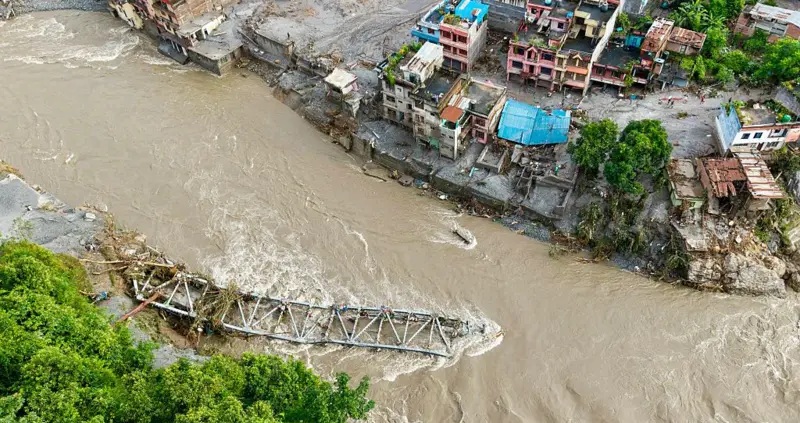
Nepal is at high risk of natural disasters such as floods, landslides and earthquakes. Women who are financially weak suffer the most. It is only when women are safe that the economy, the family, the community, and the nation as a whole are strengthened.
Pant says, “Financial empowerment is not only about earning wealth, but also about protecting the wealth earned. Unless risk protection becomes an integral part of this journey, the promise of empowerment will remain unfulfilled. ’