



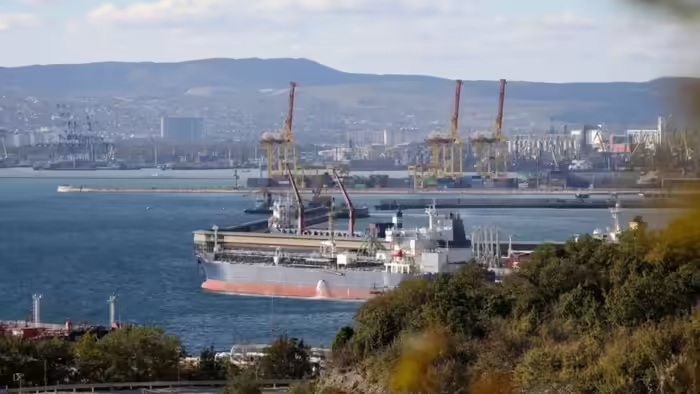

Kathmandu. Tensions in the Middle East and safety uncertainty across the Strait of Shore have led maritime insurers to impose stricter conditions on shipments. This has led to a significant increase in war-risk insurance premiums.
Analysts say that if this trend continues, it could put significant pressure not only on the transport and insurance sectors but also on energy, food, inflation and global economic growth. About 20 percent of global oil consumption and about a quarter of the marine oil trade goes to Hormuz. A fifth of the global liquefied natural gas (NLG) trade is also dependent on this waterway. As a result, prolonged disruption of this route could lead to a further increase in global oil prices, transportation costs, food prices and inflation.



According to the U.S. Energy Information Administration (EIA), an average of 21.8 million barrels of oil was transported daily through Strait Strait in 2024. More than 20 percent of global LNG supplies depend on these waterways.
Asia is most dependent on this waterway. About 84 percent of crude oil and condensate and about 83 percent of LNG shipped from Hormuz are destinations for Asian countries. As a result, China, India, Japan and South Korea are considered to be among the most vulnerable economies dependent on energy imports during the crisis.
Due to the situation in the Middle East, maritime insurance companies are now evaluating each ship transit from Hormuz individually. With strong war risk requirements, approvals and underwriting based on travel now in many cases determine whether a ship will be allowed to transit via this route. Oliver Miloszewski, head of transport for Asia at insurance and risk management firm Aon PIC, said: “Demand hasn’t gone down, risk management has completely changed. While demand for oil, LNG and other commodities remains steady, the environment for transporting them remains uncertain. ’
Tensions in the Middle East have led to a sharp increase in war risk insurance premiums for ships crossing the Strait. In some cases, premiums have increased from about 0.25 percent to 3 percent of the price of a plane. That means insurance costs for oil tankers costing between $200 million and $300 million can add up to $602,000 to $7.5 million per trip.
These increased insurance costs can eventually increase the cost of transporting fuel, food, and other goods. That could put new pressure on global import costs and inflation. Similarly, if insurance coverage is reduced further, there is a risk that hundreds of aircraft will be stranded.
Hormuz is not only important for oil and gas. About one-third of the world’s marine sewage (especially urea) is directly or indirectly connected to this waterway. A prolonged crisis could disrupt the supply of fertilizers, foodgrains, industrial raw materials and medicines. That could create new pressures on agricultural production costs and global supply chains.
Various international situational analyses have shown that the price of Brent crude oil in the international market could reach $115 to $140 per barrel in the short term if the fighting in the Middle East escalates and there is a major disruption in energy supplies. It could push up the prices of transport, electricity, food and essentials, and rekindle the cost-of-living crisis globally.
The World Bank’s scenario analysis suggests that prolonged high energy prices could drive up global inflation and slow economic growth. According to analysts, if the fighting in the Middle East escalates and causes major disruptions to the energy and trade systems, it could have a significant negative impact on global economic growth. This can affect the stock market, the money market, and the commodity market. Uncertainty among investors could increase, and economies that rely on energy imports could face further financial pressures and growth risks.
China, Japan, South Korea and India are looking for alternative energy sources and new supply systems. South Korea has stepped up efforts to import LNG from the United States and Australia. Many countries are looking for alternative trade routes, energy sources and long-term supply agreements. –Agency