



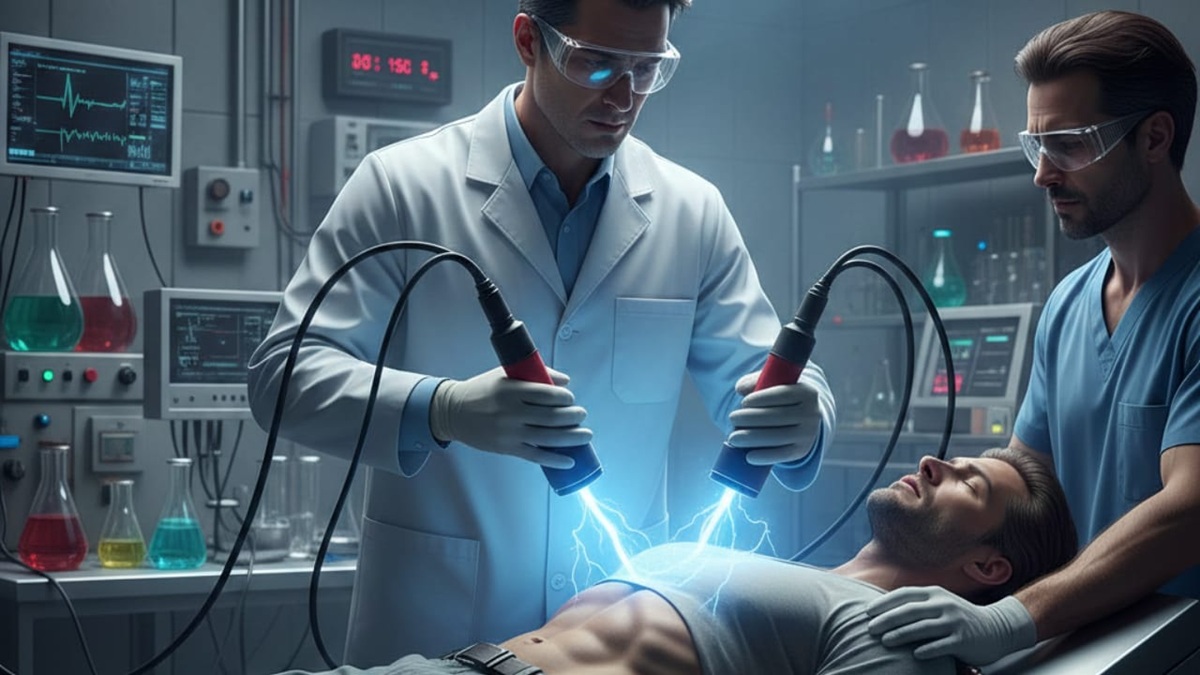

Kathmandu. Researchers from Sweden’s Chalmers Institute of Technology and Germany’s University of Freiburg have made an unprecedented breakthrough in medicine. They have shown that chronic and hard-to-repair wounds can be healed three times faster than normal using low-voltage electric current.
This discovery, based on bioelectronic technology, opens new doors of treatment, especially for patients with diabetes, cancer and circulatory problems. The procedure, which accelerates wound healing by sending electrical signals to skin cells, could help reduce surgery and prolonged hospital stays in the future.


Scientific method of directing the cell by electrical signal{
}
When the human body is injured, a small amount of electric field is naturally generated. This helps the skin cells to move to the wound area and heal the wound. However, in people with diabetes or the elderly, this natural electrical system is weak, so it takes a long time for the wound to heal. Scientists developed a special biochip that delivered a safe amount of direct current to the artificial wounds.
This process stimulates skin cells to move in the right direction, divide faster, and reorganize tissues. During the research, it was found that the electric field flowing in the same direction was able to heal the wound quickly without causing any damage to the cells.
Effective results in the treatment of diabetes and complex wounds
}
This technology can prove to be a great boon for diabetic patients. Due to the damage to the blood circulation and nerves due to diabetes, even a small wound in the leg may not heal and may later lead to amputation. Laboratory tests showed that normal skin lesions healed at a rate of 3.5 per cent per hour, compared to three times when electrocuted.
Similarly, the rate of wound healing in the diabetic sample was very low, but after giving electrical signals, the rate increased to almost the level of healthy skin. It shows that complex wounds caused by diabetes can be healed at the same speed as healthy people.
Its importance in Nepal’s health sector and rural treatment
}
The problem of diabetes is increasing rapidly in Nepal and it is estimated that about 9 percent of the population is affected by it. Due to the lack of specialist health services and lack of access to treatment in rural areas, diabetic patients are facing the problem of inability to heal their wounds.
This electronic technology can be developed as a small battery-operated patch or bandage that can be easily deployed in rural health posts in Nepal. Because it runs on a small voltage, it can be treated at home via telemedicine or community health workers. It can save many Nepalis from the mental and financial pain of costly treatment and loss of limbs.
Revolutionary changes in the treatment of the future
Maria Asplund, who led the research team, said that in the next phase, this technique will be tested on animals and then extensive clinical trials will be done on humans. It is expected that within the next 5 years, this technology will be officially available in hospitals and clinics.
It is seen as a game-changer in the field of bioelectronics and reproductive medicine. In the future, such electric bandages will also play a big role in solving the skin problems of cancer patients and the elderly.
Countries like Nepal also need to start preparing to reduce the complications of diabetes by including such cost-effective and effective technologies in their national health policies.