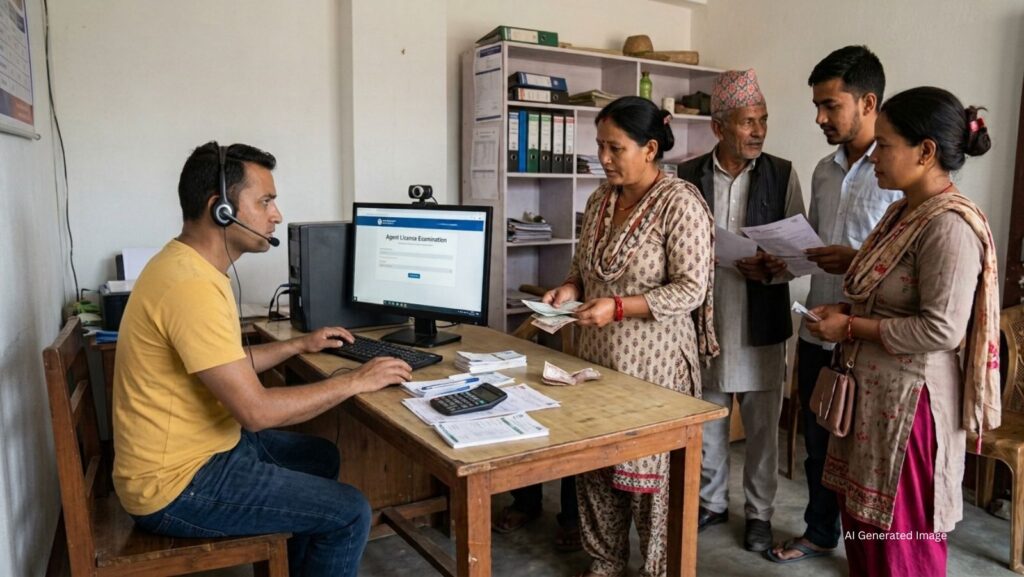






Kathmandu. In order to make the insurance market of Nepal efficient and professional, the Insurance Agent Training Guidelines conducted by the insurer have set various criteria. This guideline, issued to ensure the quality of manpower in the insurance sector, covers topics ranging from training plans to remuneration.
As per the training directive, the insurer has to approve the location, trainers, number and schedule of the training to be conducted next year and submit it to the regulatory body within mid-July of each year. It is mandatory for the trainees to have 75 percent attendance in the training. Those who attend less than that will not get the certificate.



To become a trainer, one should have at least a bachelor’s degree and acquire proficiency in the related subject. Basic insurance agent training should be at least 17 hours long.
Clause 19 of the directive states that no more than 50 trainees can be included in each training class. This clearly means that this law does not allow more than 50 people at a time. This maximum number has been fixed in order to make the training crowd-free and to ensure that the instructor can pay adequate attention to each participant. This does not prohibit training with a small number, such as 10 or 20.
Quality of remuneration and training
}
Clause 22 of the directive states that the person participating in the training coordination should be paid as determined by the insurer. However, in practice, there are complaints that the coach or coordinator is not getting proper remuneration.
If the coach or coordinator of the training does not get proper remuneration, it does not encourage the coach. This can lead to poor presentation. Good and experienced instructors are not willing to devote unpaid time, which leads to training from less experienced people. The training is done only to complete the paperwork, not the actual skill transfer.
Role of Nepal Insurance Authority
}
The mediation section of the Authority can play an active role as a regulator to implement the provision related to remuneration.
Proof of Payment: The branch may instruct the insurers to mandatorily attach a bank voucher or reimbursement of the salary paid to the trainer and coordinator while submitting the training report (as referred to in Section 16).
Monitoring and Inspection: In exercise of the powers conferred by Section 23 of the Directive, the Arbitral Branch may conduct a surprise inspection and communicate directly with the trainers to determine whether they have received their remuneration.
Criteria: The Authority may specify the minimum wage limit of per hour or per session, further clarifying the point that is as determined by the insurer.
Digital Reporting System: As soon as the training is over, an arrangement can be made to upload the details of the instructor and payment status on the online portal. If the Authority directs the insurer to include the details of TDS deposited in the Inland Revenue Office or Large Taxpayers Office by deducting advance tax for the remuneration of the trainers in every quarter, then the trainers will be saved from labor exploitation.
In this way, only if the regulator links the payment process with the legality of the training will the true spirit of the directive be implemented and the foundation of the insurance agent will be strengthened.