






Kathmandu. Insurable interest is one of the most important principles of insurance. This principle assumes that the interest or direct interest of the proposer or the insured or the insured holder must be attached to the insured content. That is, in the event of loss or loss of life to the insured subject matter or person, the insured person or institution will have a direct negative impact. As a result, he tries to protect the insured content as much as possible.
The issue of insurable interest has been given priority in various guidelines related to insurance policies issued by the Nepal Insurance Authority and in the decision of various cases. This is because, in the absence of this, the risk of the insured benefiting the insured from the loss of the subject matter, property or person, increases.



The Nepal Insurance Authority (NIA) has also implemented AML CFT (Asset Laundering, Terrorist Acts and Financing Financing Directive 2082 for the manufacture or expansion of weapons of mass destruction).
This guideline includes a provision that the insurer can collect the amount of insurance premium even from the people who do not have the insurable interest. However, there is a provision that while collecting the insurance premium, the insurer should collect and preserve the documents and evidence to establish the reason for depositing the amount on behalf of the insured and the relationship between the insured and the depositor.

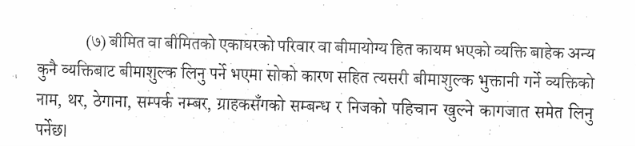
Such a provision gives freedom to deposit the premium on behalf of the insured. Clause 20 of the directive states that the insurer may, while analyzing the risk, collect the insurance premium from another person by obtaining details and documents. While collecting the premium from the third party, the insurer should also collect the name, surname, surname, address, contact number, relationship with the customer and identity documents along with the reason for the same.
This provision has made it easier for the insured residing abroad to pay the renewal premium on behalf of the policy, to deposit the first premium at the time of issuance of the policy or to deposit the insufficient amount of the insurance premium by the agent itself. According to the directive, there is no obstruction in depositing the insurance premium with proof by a relative other than the agent.
In the absence of a clear understanding of the provisions of this directive, insurers are reluctant to accept insurance premiums from third parties except those who have insurable interests.