



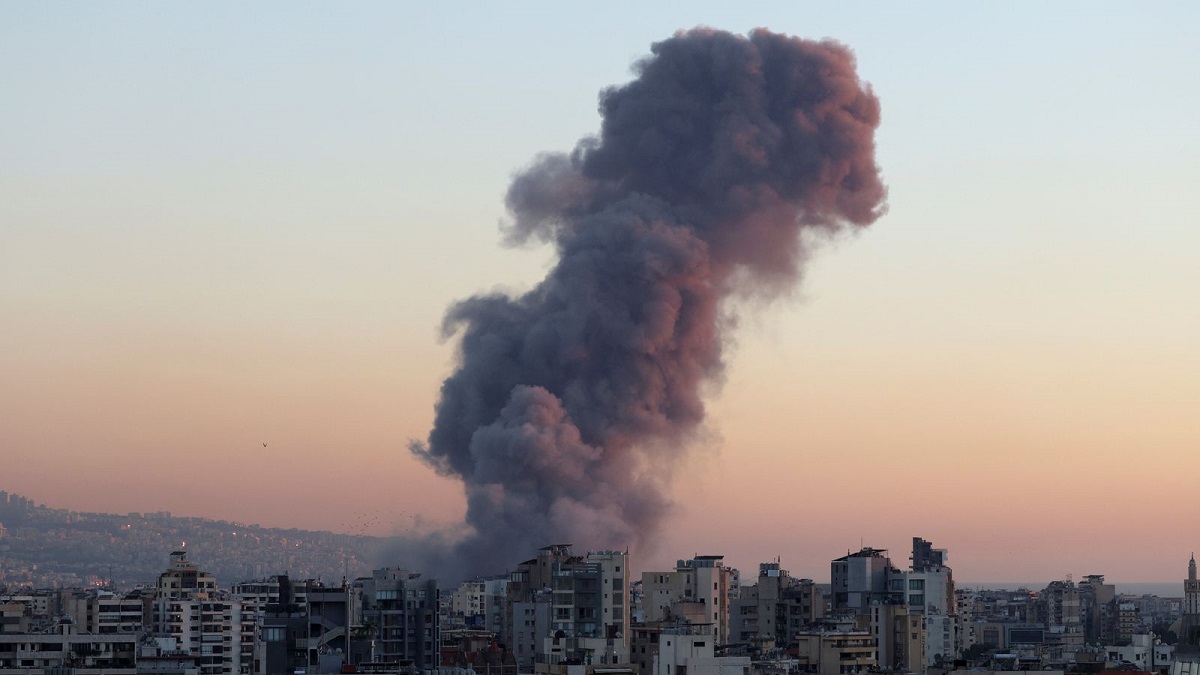

Kathmandu. The war in the Middle East is unlikely to have a significant impact on reinsurance companies globally. A new report from S&P Global Ratings makes this assessment given their limited direct asset exposure to the sector.
The report notes that the global reinsurance industry entered 2026 with significant capital strength. “This is supported by strong underwriting performance and strong investment income,” the report said, adding that global reinsurance companies’ direct asset exposure to the Middle East is limited and reinsurance companies’ capital adequacy is strong enough to mitigate the potential risk of credit quality degradation due to conflicts. ’



Moreover, according to the rating agency, property risk in this sector is not significant for the top 19 global reinsurance companies, but on the liability side, reinsurance companies face potential losses. “This could impact their earnings,” S&P said. Which is a section. It insures complex or high-risk risks, including war risks, aviation, energy, political violence, and other special categories. These lines are directly linked to events in the area and increase the likelihood of significant claim activity. ’
What is the impact on reinsurance companies?
S&P said insurers will suffer significant losses, and the conflict could have long-term implications for the reinsurance industry. “However, its ultimate impact and impact on the reinsurance sector is highly uncertain at this time and will depend largely on the timing, scale and development of the conflict,” S&P said. ’
Many of the world’s reinsurance lines are now facing increasing volatility and potential losses. These include insurance policies covering specific categories such as maritime, aviation, energy, political violence, terrorism and cyber, as well as asset risks and supply chain or trade disruptions in affected areas. Marine insurance companies have already begun canceling war-risk coverage that applies to conflict zones, including the Persian Gulf and surrounding waters. Reinsurance companies with significant risks in large geographic regions and specific markets in the Middle East are likely to be the most affected. Capital adequacy continues to protect reinsurance companies worldwide from severe stress events.
The global reinsurance sector entered 2026 with strong capitalization. It’s getting stronger. This continues the long-standing trend of balance sheet ball. Capital adequacy has always been one of the key strengths in the sector.
S&P’s Highest Capital Adequacy Stress Scenario revealed that the combined capital redundancies of the top 19 global reinsurers stood at 11% at the end of 2024. The rating agency expects the industry to further improve its capital redundancy by the end of 2025.
S&P will remain a key force in the capital adequacy sector and believes it will demonstrate resilience even in the face of severe stressful situations, including geopolitical shocks such as the current conflict. According to AO, global reinsurance capital reached a record $760 billion as of September 30 last year. This is due to the increase in both traditional and alternative capital sources. S&P expects that number to rise even after the full year 2025 results. –Agency