





Kathmandu. Due to global warming, the temperature of the ocean is increasing rapidly. Coral reefs are being affected the most.
Most of the world’s coral reefs, including the Great Barrier Reef, are facing a crisis. Scientists in Florida have created a unique method to temporarily protect endangered coral reefs.



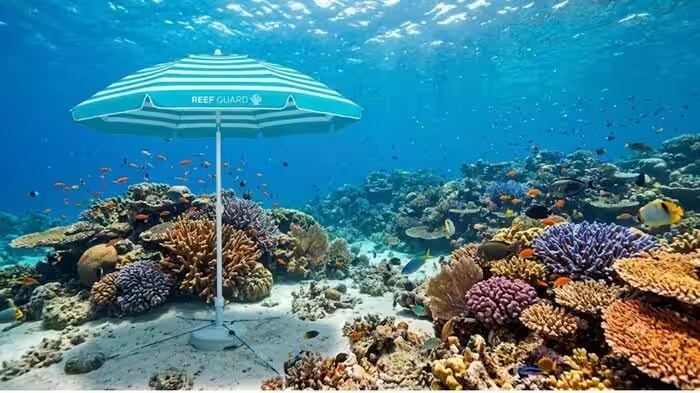
This method involves attaching umbrellas under the sea. Scientists are covering sensitive rocks with umbrellas so that direct sunlight does not reach them. This will reduce the temperature of the water around the rock. It will protect it from extreme heat.
Scientists successfully tested this experiment in the ocean near Florida in 2024. They installed specially designed umbrella-like structures on colonies of two types of brain corals. These structures blocked about 60% of sunlight reaching the rocks.
Apart from this, these structures also blocked ultraviolet rays. It was then observed that the corals covered by umbrella-like structures lost less color. Some rocks also regained their original color. However, those that were exposed to direct sunlight were completely destroyed.
Coral reefs begin to die as environmental changes disrupt the connection between the corals and the microalgae that live in their tissues. These algae provide a large amount of the energy the coral needs and also contribute to maintaining its distinctive colors. When the water is abnormally hot, corals expel these algae. As a result, they become inactive. This deprives the corals of energy and causes the color to disappear or fade.
The experiment was conducted by marine biologist Karen L. Neely of Nova Southeastern University in collaboration with Carolyn Dennison, Catherine Toth, Aurelise Chaparro, and Andrew Baker. In Newfound Harbor in the Florida Keys, researchers set up 20 temporary shadow structures in 10 coral colonies of the species Pseudodiploria clivosa and Colpophilia neton. Another 20 colonies acted as shadowless control groups.
These structures were made of pipes and nylon fabric. They were securely anchored in coral colonies at a height of about 30 centimeters above sea level. Their purpose was not to cool the surrounding seawater. However, it was to reduce the amount of intense sunlight reaching the corals.
Research has shown that the shadow structures reduced incoming light by about 60 percent. This reduced the heat and intense radiation that could worsen coral bleaching. – Agency