




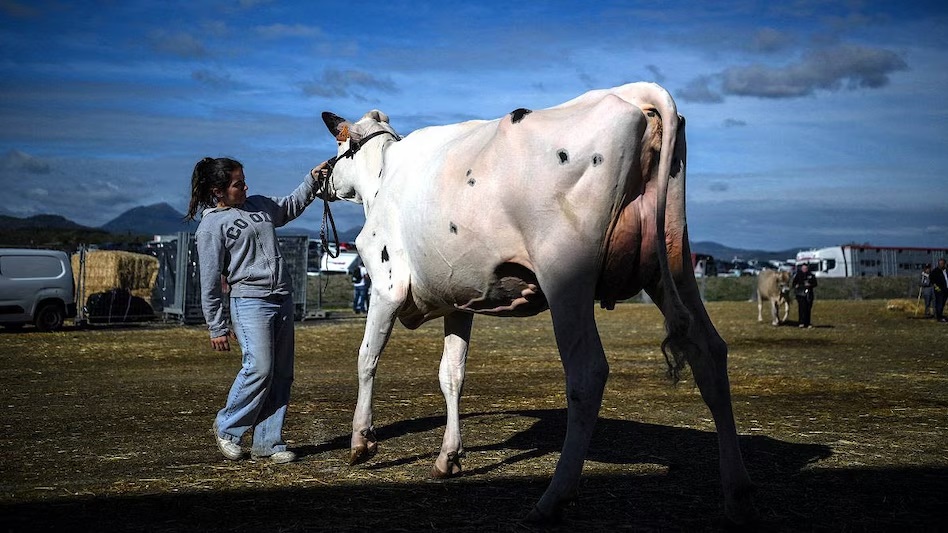

Kathmandu. The Shamonda virus, which used to affect animals, has now spread to humans. A patient infected with this virus has died in France.
This is the first time that a person has been infected with this virus. The patient was being treated at a hospital in Lyon, France. He was already suffering from a serious illness and there was a significant decrease in his body’s immunity. This incident has raised questions about how dangerous this animal-transmitted virus is to humans.



The Shamonda virus mainly infects cattle and other livestock. It is spread through the bites of small insects called midges. The virus was first discovered in Nigeria in 1965. It has now spread to more than 12 European countries. However, according to the World Health Organization (WHO), the risk of a large-scale human outbreak is currently low.
What is the Shamonda virus?
Shamonda is a virus. It infects most animals. In cows, it can cause fever, diarrhoea, and reduced milk production. The virus can enter the body when an infected midge bites an animal. The virus was first detected in cows and other livestock in Nigeria in 1965. It then spread to parts of Africa and Asia.
The virus was first detected in Europe at the end of July this year. As of October 20, there have been reports of infections in more than 12 European countries, including France, Germany, Spain and Ireland. These countries raise a large number of cattle. French officials believe the virus has been circulating in the country since the spring.
How does this virus infect animals?TAG_OPEN_strong_30
The Samonda virus is most prevalent in livestock. In addition to cows, it can also affect animals such as sheep, goats, horses and alpacas. Infected animals may develop fever and diarrhoea, and cows may start producing less milk than before. In some cases, pregnant animals may also have miscarriages.
The babies in their wombs can also experience serious complications. Brain and nerve damage has also been shown in some horses. However, the long-term effects of new variants of the virus discovered in Europe on animals are unclear.
How dangerous is the Chamonda virus for humans?
This is the first recorded case of infection with humans with the virus in France. The patient had already had a severe illness and was severely immunocompromised. French authorities suspect that the patient contracted the virus through the bite of an infected midge in eastern France. This year, the virus spread to cattle.
According to officials, the patient’s brain problems may be linked to the Showmand virus. However, the connection between the patient’s death and the virus infection is still under investigation. According to the WHO, based on the information available so far, this is an isolated case. Currently, the risk of widespread transmission of the virus to people is low. However, information about it is currently limited. Therefore, more research is needed to fully understand its danger.
Why TAG_OPEN_strong_28 is it important to monitor this virus?
The Shamonda virus is not included in the WHO’s list of diseases. Therefore, countries are not required to report cases to the organization. The virus is also not included in EU regulations and therefore there is no dedicated surveillance system for cases.
For this reason, it is difficult to get complete information about the number of animals infected with this virus in different countries around the world. More information is needed to understand its spread and its impact on both animals and humans. Currently, the risk of the virus spreading widely to humans is low. In many European countries, it is important to monitor the virus after the infection of cattle and the first human case. – Agency