




Kathmandu. The report on hydropower projects published by the Nepal Insurance Authority (NIA) has shown that the weak capital capacity of the insurance and reinsurance companies in Nepal has become a big challenge for the hydropower sector.
Since a single hydropower project is worth billions of rupees, Nepal’s local insurance companies alone cannot bear 100 percent of the risk. For this, they have to send a large portion to foreign reinsurance companies.



When Nepal’s companies are weak in international credit ratings, the world’s reputed reinsurance companies are reluctant to take the risk of Nepal. When reinsurance is expensive in the international market. This has a direct impact on the insurance premium of Nepal’s hydropower.
The dispute between insurance companies and hydropower developers over the ‘minimum premium directive’ has intensified. The steep increase in insurance premiums has added to the financial burden of the promoters.
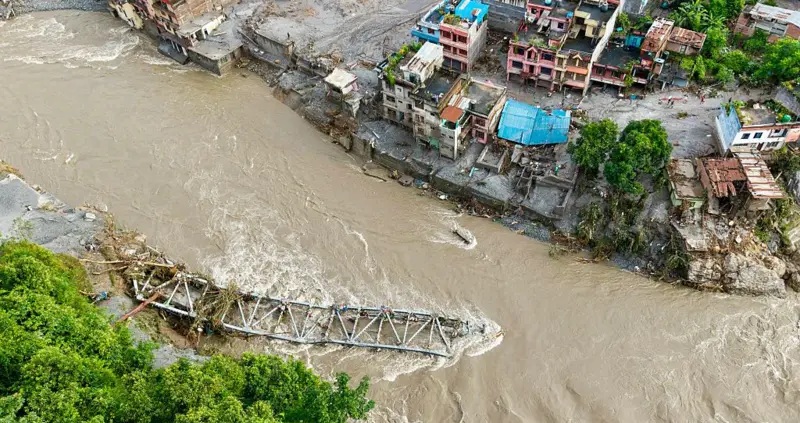
NEA has increased the insurance premium of engineering insurance by up to 500 percent in some cases after the insurance companies had to pay huge amount of claim due to huge losses in the hydropower sector in the past years.
The Independent Power Producers’ Association, Nepal (IPPAN) has strongly opposed the move. This abnormal increase in insurance rates will increase the cost of the project, it will be difficult to get loans from banks and the investment of the entire private sector will be at risk.
Nepal’s hydropower insurance market suffers from four complex failures. These are the geographical concentration of risk, inadequate domestic reinsurance capacity, a systematic claim payment structure for disasters caused by climate change, and such an insurance rate system has neither accurately priced the disaster risk. Nor has the premium rate been fixed on the basis of differences in the nature and nature of different parts of Nepal and the risk of river basins flowing from different parts of Nepal.
The regulatory framework issued by the Nepal Insurance Authority (NIA) has adopted a strategy to protect the financial efficiency of the domestic insurance market on the one hand and to make the domestic reinsurance companies commercially mature on the other. This provision becomes even more sensitive and important when it comes to insuring hydropower projects with large capital investment and high natural risks (floods, landslides, earthquakes).
Risk Holding Limit and Hydropower Sector
Section 6(2) of the Reinsurance Directive, 2080 sets strict legal limits to ensure that primary non-life insurance companies do not collapse due to large claims in hydropower projects. Domestic insurance companies are allowed to hold a maximum of 5 percent of their net worth on a single risk equivalent to a single hydropower project or policy. In the case of hydropower projects worth billions of rupees, the insurance companies will have to send a large part of the liability to the reinsurance market as their own net worth cannot sustain them.
End of ‘Direct Session’
In the past, the regulator had made it mandatory for domestic reinsurance companies to transfer a certain stake directly from the primary insurers to ensure uncompetitive business. However, the regulator has been rapidly reducing it, ending the practice of getting business for free without hard work.
According to the mandatory schedule of Section 7(1) of the Directive, the fiscal year 2079. The automatic allocation of 10 percent that remained till 80 percent was reduced to fiscal year 2084. Dropping to zero percent by 85. This simply means that domestic reinsurance companies will no longer be able to pass on their share of the risk of complex and large projects, such as hydropower, by sitting idle.
Prevention of capital flight
}
Although the automatic business has been abolished, the regulator has also built a strong legal wall to protect the domestic reinsurance market. According to Section 8 (1) of the Reinsurance Directive, 2080 and its first amendment, the primary insurance companies must compulsorily hand over at least 30 percent of their net holding and remaining share after other arrangements to the domestic reinsurance companies while re-insuring the contract of a hydropower project. This 30 percent can be used in the international reinsurance market only after it is consumed in the domestic market. This arrangement prevents the large amount of insurance and national capital earned from the hydropower sector from going abroad.
This policy change has taken a big leap forward in the Nepali reinsurance sector. The 30 per cent base market has been protected, but domestic reinsurance companies will now have to earn it on their own, not as an “easy tax”.
Domestic reinsurance companies have been compelled to compete commercially at the same table as international reinsurance companies, assessing technical risk of hydropower projects, determining reasonable premiums and verifying their ability to pay claims. Ultimately, this will establish them as a globally competitive organization.