




Kathmandu. On the occasion of World One Health Day 2026, Waling Municipality of Syangja organized a program on “One Health Dialogue: From Community to Policy”. The program has been organized with the objective of raising awareness about One Health in the community, highlighting the interrelationship between human, livestock and environmental health, and building a common commitment for the effective implementation of One Health Policy at the local level.
The rally was organized with the slogan “Basis for Building a Prosperous Community: Shared Commitment to One Health: Collaboration and Behavior”. Waling Municipality Mayor Krishna Khand, Deputy Mayor Kabita Tiwari Gaire, Waling Municipality Public Health Officer Kamal Prasad Pandey, Gandaki Province, Ministry of Agriculture Land Management and Cooperatives Dr. Rajesh Chaudhary, Secretary of Nepal One Health Institute, Sankalpa Bhattarai, Acting Chief of Agriculture Development Office, Syangja, Narayan Pathak, Chief of Agriculture Development Resource Centre, Gandaki Province Province Office, Sudip Regmi, discussed the issue of One Health and expressed their common commitment and solidarity for its effective implementation.


In the program, a street play on the theme “One Health” was presented under the leadership of students of Waling Multiple Campus, Syangja. The stakeholders participating in the program have issued a 7-point “Waling One Health Declaration 2083” expressing solidarity, cooperation and commitment for its practical implementation by balancing all the aspects, recognizing the fact that the health of people, animals, plants and environment are interrelated.
The program was organized by Waling Municipality with technical support and coordination of Heifer International Nepal, Diyalo Foundation, Nepal One Health Institute and Waling Multiple Campus.
A health issue in the community raised from the street
}
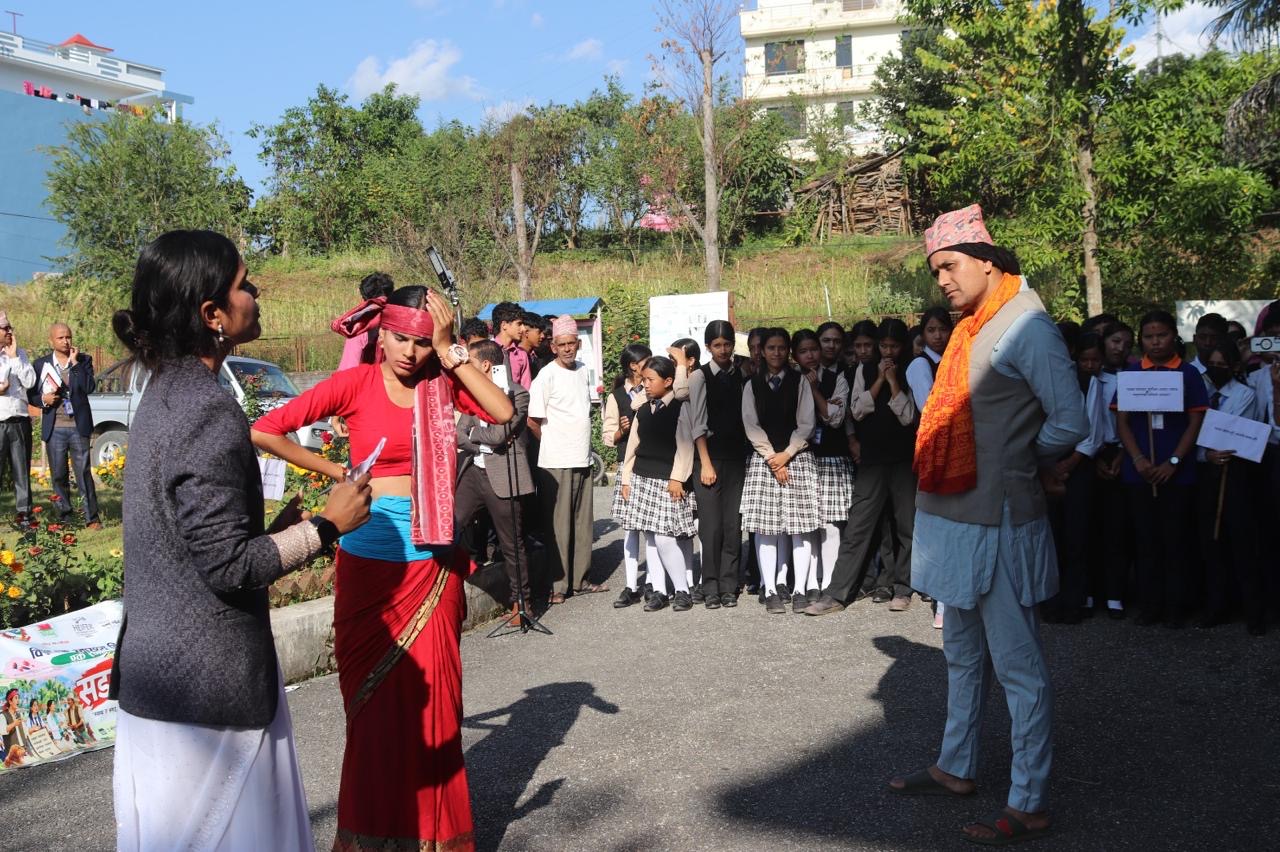
In the presence of college students, health workers, chiefs and representatives of government and non-government offices, professors, teachers, farmers, cooperatives, Tole Development Organizations and others, they marched around the Waling market carrying placards with slogans with the message of “One Health”. The rally with a health message reached the premises of Waling Municipality and turned into a street drama. The street drama presented by the students vividly depicted various health risks and behaviors seen in the community.
The play also raised questions about the improper use of antibiotics in humans and livestock and the resulting antimicrobial resistance, diseases transmitted from animals to humans including AMR and rabies, the impact of indiscriminate use of pesticides on human health and environment in vegetable production and the hygiene and safety of animal products including milk and meat.
The play highlighted the dangers of consuming or selling milk without completing the prescribed waiting period after the use of antibiotics in veterinary treatment and the need to maintain food hygiene from the farm to the plate. The main attraction of the play was the message that the solution to such problems is not possible only by one person or agency as the health of people, animals and the environment is interconnected, and the joint efforts of all sectors are needed.
Multi-sectoral dialogue on street drama:
After the street play, discussions were held among representatives of local governments, human and animal health experts, technicians of the agriculture sector, representatives of Nepal One Health Organization, farmers, cooperatives, various government agencies and community stakeholders. The dialogue discussed the role and cooperation of the concerned sectors on prevention of rabies and other zoonotic diseases, responsible use of antibiotics in humans and animals, safe agricultural production, pesticide management, food hygiene and environmental protection.
The discussion highlighted the need to address the health risks seen in the community not only as problems of individual sectors but also linking them to human health, animal health, agriculture, environment and food systems.
From a health policy to implementation
}
Waling Municipality has already approved a health policy and procedure and has been giving priority to this concept in its policies and programs. Against this backdrop, the World One Health Day has provided an opportunity to connect the problems seen in the community and the suggestions of the stakeholders with the policy priorities and implementation of the local government.
The programme has conveyed the message that ‘One Health’ should not only be a subject of human health sector but should be pursued as the concept of common development related to agriculture, livestock, food security, environment protection, education and local governance.
‘Waling One Health Declaration, 2083’ issued
The ‘Waling One Health Declaration, 2083’ has been passed incorporating the issues raised in the program. The declaration has expressed common commitment to the implementation of a health policy and working procedure, coordination between human health, animal health, agriculture and environment, prevention of zoonotic diseases including rabies, responsible use of antibiotics, safe agricultural production and promotion of food hygiene.
Similarly, the manifesto has also included the issues of increasing the participation of farmers, cooperatives, schools, health volunteers, youth and communities, and joint action plan, determining responsibilities and regular review on the basis of common priorities. The declaration issued with the slogan “Basis for Building a Prosperous Community: Shared Commitment, Collaboration and Practice in One Health!” has prepared the basis for linking public awareness on One Health with behavior change and institutional collaboration.
Learning opportunities for other local units
}
At a global level, the initiative of Waling Municipality can be considered as an effort to institutionalize this concept under the leadership of the local level in the context of the importance of integrating the One Health concept in the agri-food system along with human, animal and environmental health. The initiative is expected to provide learning to other local governments for the implementation of a health policy and procedure, community-level public awareness, multi-sectoral dialogue and a common declaration.
In the coming days, if the commitments of the manifesto can be linked to a clear action plan, responsibility, resource mobilization and regular monitoring, Waling’s experience can be extended to other municipalities. Waling’s initiative to bring the health issues raised by the community to policy, collaboration and practical implementation under the leadership of the local government has laid the foundation for new learnings in the localization of One Health.