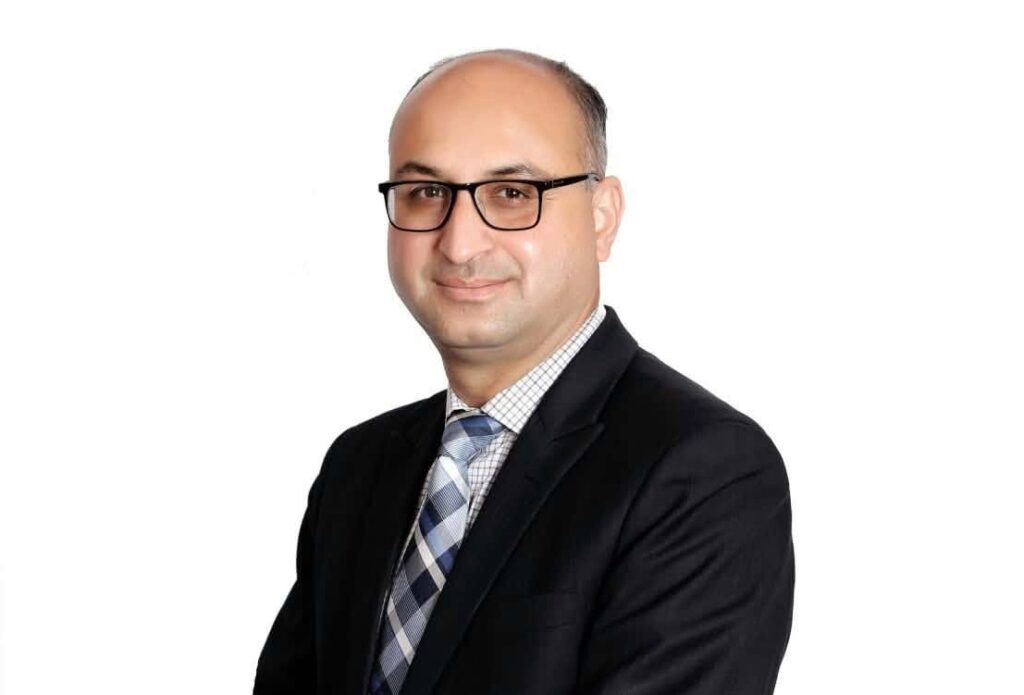






- Madan Shrestha
Milton Friedman (1912–2006) was an American economist, statistician, and public intellectual known for his influential defense of free markets and for developing the theory of monetarism. Milton Friedman illustrated that, “A stable and efficient monetary and banking system is an essential foundation for prosperity.” Similarly, Robert Shiller defined” Finance is not merely about making money; it is about achieving our deep goals and protecting our future. Nepalese economy is currently navigating through a contradictorystage. For the first time in decades, financial institutions are drenched with liquidity. Banking sector is considered the barometer of the nation’s economic health, and it is the heart of the economy.
Interest rates have crashed to historic lows in financial institutions. Weak regulations, corruption and irrational policies are contributing factors that make the environment unsafe. Bankand private entrepreneurs are confident to invest in long-term projects. The political landscape has experienced a drastically shift with the election of Balen Shah as the Prime Minister. For Prime Minister Balen Shah’s new government, the opportunity is immense as well as there are various challenges against him. Prime Minister faces the challenge of translating populist rhetoric into sound economic policy. I think the new government must implement a two-pronged policy and a short-term intervention to speed credit flow and long-term operational banking activities to ensure sustainable growth.



Banking sector is currently facing a complex challenge characterized by excess liquidity, declining interest rates, and weak credit demand. Banking system has been experiencing a continued phase of excess liquidity. Monetary policy remains reconciling, according to the latest biannual macroeconomic report published by the Nepal Rastra Bank (NRB). Ever since 2023, the financial system has been continuously storing excess liquidity. Nepal Rastra Bank has been holding the excess reserves that accomplished historically high level. As on Magh End, 2082 (Mid- Feb. 2026, Major financial indicators, Nepal Rastra Bank holds 7,727,990 in figure, which is amt in Mn of Rs or it means Seven Kharab seventy-two Arab excess.
The credit- deposit (C/D) ration is 74.32 percent as on Magh End, 2082 (Mid- Feb 2026), indicators published by Nepal Rastra Bank but the regulatory ceiling of 90 percent. Banks have reduced their interest rates on fixed deposits and general saving accounts in Chaitra 2082 compared to the rates offered in Falgun 2082. Normally, the interest rate in commercial banks is 2.75 percent in general individual saving accounts and 4.5 percent is the higher interest rate in fixed accounts. On the other hand, while we observe, the demand for loans is decreasing day by day. Nepal’s economy has appeared a period of negative interest rates that a cautious economic recession. In contrast, the national inflation rate currently stands at 3.25 percent February 2026. Inflation is an important macroeconomic indicator that provides insights into the overall health of an economy. It discloses the negative real interest rate where the value of savings effectively declines over time.Former NRBexecutive director Nara Bahadur Thapa indicated that this development is a classic sign of a fearful economic depression.In this context, people tend to save less due to the low returns, while their purchasing power is instantlyhammered by high inflation, Thapa described.The trend of declining interest rates is setting to continue.
Former CEO, Bhuvan Dahal said political stability, rather than low interest rates alone, would be key to boosting investment. As per Dahal, lower interest rates do not necessarily guarantee increased investment thatwhat matters more is a business environment that ensures better returns.Demand for loans is going to decrease consistently thus the interest rates have naturally come down. A lower base rate means the cheaper the loan rate but also decreasing the demand of loan. Private sector, the business confidence and economic activities are not going to pick up.
The new government must emphasize persistent tax management, constant industrial guidelines, and transparent strategies. The government currently holds massive sums in idle budgets. When the government pays this money into private sectors along with the demand for goods and services will increase. To boost the banking sector constantly, cash flow-based lending model should be adopted. Banks should be skilled in lending based on the feasibility of a business plan and launched cash flows rather than just the value of the land or collateral system.Current economic uncertainty and declining public confidence indicate a slowdown in the banking sector. Thus, the new government should provide policy stability and infrastructure that led to the entire composition in banking sectors. NRBmust take action that ought to provide smart and forward-looking regulation that it to hold innovation and a service-oriented mindset. The major function is unlocking the idle capital and launching massive infrastructure projects to absorb sluggish liquidity. It requires motivation for the private sector to invest in productive industries.
The central bank should foster a list of priority sectors to include tourism, information technology and communication technology-based industries, as well as export-oriented industries that use domestic raw materials.
Strategic solutions to revitalize the banking sector
1. Promoting credit demand through targeted lending: agriculture, manufacturing, hydropower and small and medium Enterprises (SMEs).
2. Enhancing government capital expenditure: infrastructure, roads and transportation, energy projects.
3. Strengthening monetary policy transmission: Improve coordination between fiscalmonetary policy and ensure effective transmission of policy rate drops and encourage banks to pass on lower rates to borrowers.
4. Managing excess liquidity effectively: encourage long-term investment funds, promote infrastructure bonds and develop capital markets.
5. Addressing non-performing loans (NPLs): strengthen credit risk assessment, enhance loan monitoring systems and introduce asset reconstruction companies.
6. Promoting digital banking and financial innovation: expanding mobile banking services, promoting fintech startups and implementing digital credit scoring.
7. Strengthening regulatory framework: flexible monetary policy, strong supervision of banks and transparent regulatory environment.
8. NRB should introduce specialized refinance facilities for banks that lend to export-oriented industries. This would lower the cost of credit for these businesses and make them more competitive business globally.
If these strategies are properly implemented, banking sector can achieve sustainable economic growth.
(Student at Nepal Open University.)