




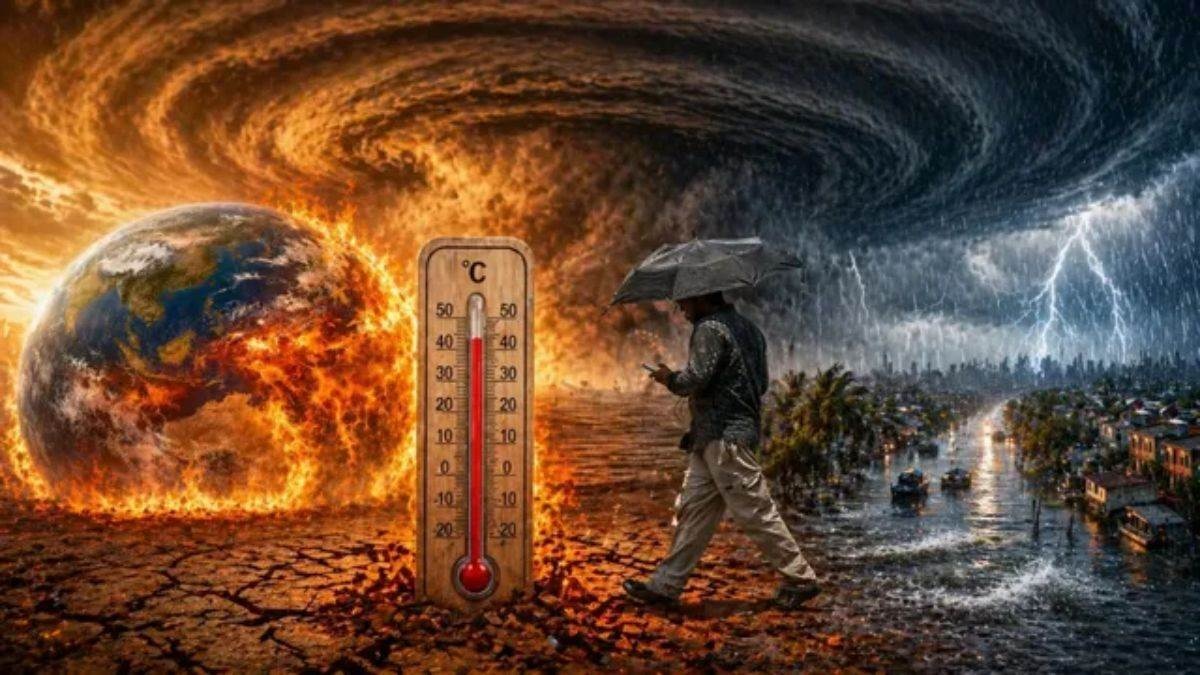

Kathmandu. El Niño is expected to significantly alter disaster risk in many areas in 2026. According to a new study by Moody’s, insurance companies and reinsurance companies will have to consider its impact on various risks.
This climate pattern includes changes in Pacific Ocean temperature, trade winds, and atmospheric circulation. This can affect regional temperatures, precipitation, and hurricane activity globally. NOAA confirmed El Niño status in June, and the phenomenon has strengthened since then.



In Asia, El Niño can cause below-normal monsoon rainfall, increase the risk of drought, and affect agricultural production, including rice and palm oil. Changes in wind patterns in the western North Pacific can also affect the location and speed of storm formation.
However, Moody’s notes that the relationship between El Niño and the intensity of the storm is uncertain. In the US, El Niño could increase the likelihood of hurricane-like conditions in parts of the South. However, unusually warm Atlantic waters could make hurricanes more likely and more dangerous.
The risk situation in Australia is even more complex. However, Australia is experiencing unusually high rainfall this year.
According to Moody’s, previous El Niños are associated with a higher risk of drought, heat waves and fires. “El Niño increases heat and dryness in Australia,” the report said. “Non-El Niño increases the risk of fires by more than 50 per cent compared to non-El Niño years. Whereas at the same time, it reduces the risk of tropical cyclones.”
Moody’s warned that the transition from extreme rainfall to extremely dry conditions, combined with higher-than-normal temperatures, could increase the availability of fuel (dry vegetation) for fires. For insurance and reinsurance companies, Moody’s said, “The risks associated with El Niño are interlinked. That’s why it’s important to consider a number of risks when evaluating portfolios.” ’
The same climate model can increase the risk of one type of disaster and reduce another. Which means models focused on individual hazards may not fully capture the overall impact. Moody’s said, “Its disaster models include the interrelationship between fires, tropical cyclones, floods and wind-related risks. While climate-adaptive models take into account recent research on how warming may affect the frequency, intensity and impact of future El Niño events.” —Agency