



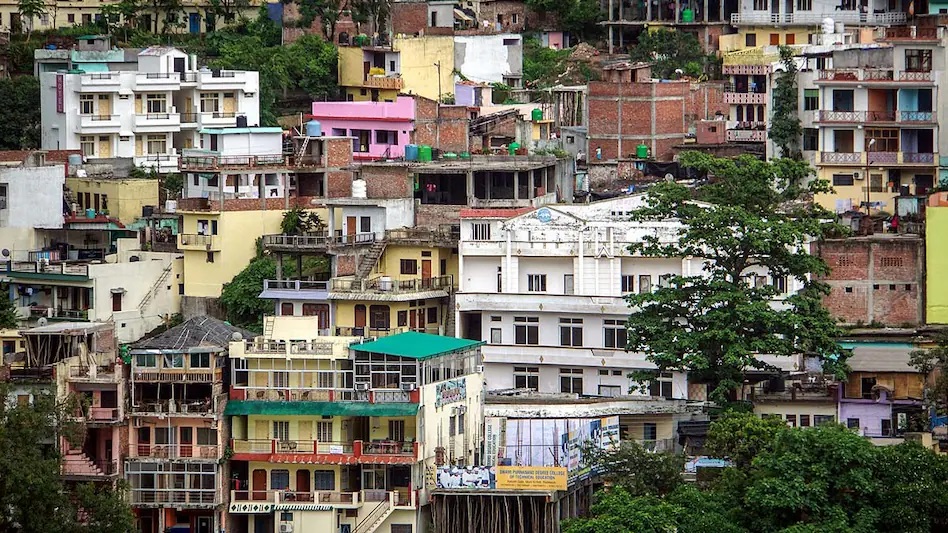

Kathmandu. Houses, hotels and roads are being built at a rapid pace in the mountainous areas that are at risk of flooding and glacial lake bursts.
According to a new study, about 300,000 people live in areas at risk of natural disasters in Nepal, southeastern Tibet and parts of India’s Uttarakhand. Between 2016 and 2023, construction in these areas increased by about 45 percent. Meanwhile, construction in areas at risk of flooding from glacial lakes increased by about 78 percent.



The study, published in the journal Scientific Reports, was conducted by nine researchers from the UK, Nepal and India. They examined areas within 50 km of Himalayan rivers and around about 1,360 glacial lakes. The researchers said that the number of people at risk could be even higher. Because the study did not include all the surrounding areas.
Houses and hotels are being built on the banks of the river
According to the study, hotels, roads, and other buildings are being constructed at a rapid pace for tourism in many Himalayan areas. Pokhara city of Nepal is a prime example of this. This city is popular among tourists. In the last 30 years, the number of tourists has increased and the number of buildings has also increased.
The Seti Gandaki river flows through Pokhara. According to the mayor of the city, Dhanraj Acharya, some old buildings are only 5 meters away from the river. According to the new rules, the buildings have to be constructed at a safe distance from the river. However, it is not easy to remove the old buildings.
Hotels and houses have also been built on the banks of rivers in the Annapurna region of Nepal. Recent floods and landslides have caused damage here. These incidents have also affected tourism.
Glacial lake bursts may cause flooding
}
Glaciers are home to numerous glacial lakes. Glaciers are large masses of ice accumulated in the mountains. Due to the increasing temperature, this ice is melting rapidly. Due to this, the water in the lakes is increasing. If the lake bank breaks, the water can flow downstream rapidly. Houses, roads, and bridges can be washed away in its path.
Since 1940, about 30 incidents of flooding caused by glacial lake outbursts have been recorded in Nepal. Apart from this, heavy rains in the mountains can cause mud and stones to fall. This damages villages and cities under the hills.
Rising temperatures also increase the risk
According to scientists, the rate of temperature rise in the Himalayas is almost twice the global average. Due to this, glaciers and mountain snow are melting rapidly. This can weaken the soil of the mountains. Earthquakes also increase the risk of mud and rocks slipping from the mountains. This can increase the risk of floods and landslides in areas located along the banks of rivers.
According to experts, there are rules prohibiting construction on the river banks in many places. However, they have not been followed properly. In Nepal, preparations are being made to ban construction in some flood-prone riverbank areas.
Meanwhile, on October 12, the Uttarakhand government approved new rules governing construction and land use in flood plains. These are meant to reduce flood damage to people, homes and essential facilities.
According to experts, it is important to understand the risks involved before building houses, hotels, and roads in mountainous areas. Unplanned construction near rivers and glacial lakes can cause more damage during floods. Therefore, it is not only necessary to establish rules. But they also need to be enforced.