




- Prajita Narayani Tiwari
}
When I started working in a life insurance company, I had the opportunity to understand the sector in a much different and deeper way than it appears from the outside. Through this article, I have tried to share some of the questions and thoughts that have arisen in my mind while experiencing the possibilities, challenges, weaknesses, efforts and needs for change from close quarters.


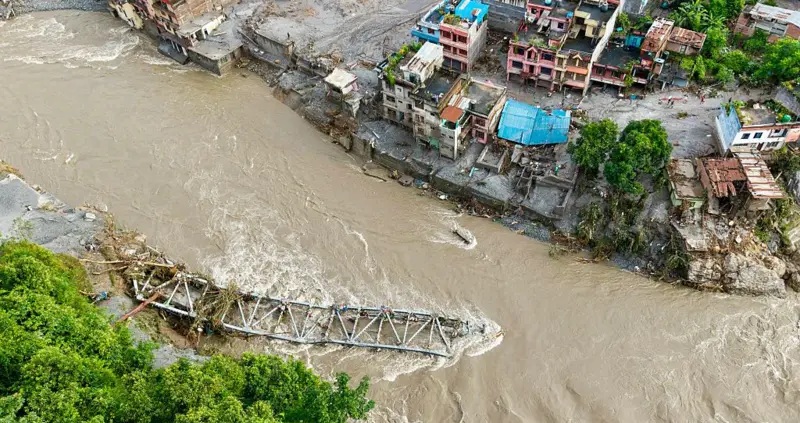
We Nepalis talk a lot about the future. We save for our children’s education. We will acquire land to build a house. We are looking for a loan to start a business. We plan to go abroad. We set aside some money for old age. But one question we often ask too late is, “What happens if something happens tomorrow?”
One of the economic values that seeks the answer to this question is insurance. But for many, insurance is still more of a policy than a policy, a premium more than a protection, more savings than a long-term plan, and a calculation of how much money comes back rather than risk management. We have bought insurance, but do we understand insurance? Perhaps this is where the most important debate on Nepal’s insurance journey begins.

Insurance is growing, but how much is the insurance culture growing?
According to the data of the Nepal Insurance Authority, the fiscal year 2081. A total of Rs. 82 including life and non-life insurance has been disbursed. The gross premium collection is Rs 227.18 billion. Access to life insurance has also increased significantly. However, the fact that the total insurance penetration rate stood at 3.72 per cent is also an indication that the potential for insurance is even bigger than that of our economy and society.
In other words, the market has grown. But, along with the market, has the understanding also increased at the same pace? That question is important. Increasing the number of insured is an achievement. However, getting the right insurance is another achievement. Rising premiums is a statistic. However, it is another thing to have a proper risk assessment.
What exactly is insurance? We have often referred to insurance as ‘saving for the future’. This understanding is incomplete. The basic philosophy of insurance is risk management before saving. Life is uncertain, business is uncertain, property is uncertain, health is uncertain, natural disasters are uncertain and accidents are uncertain. However, even if the risks are uncertain, the impact of the economic damage can be managed. One of the most systematic means of management is insurance.
A farmer works hard throughout the year. What if a hailstorm destroys the crop? A small businessman opens a store with lifetime savings. What if there is a fire? What if the main breadwinner of a family dies prematurely? What if there is a major damage to an industry? What if a car is in an accident? Such incidents don’t just destroy things. This can disrupt the economic structure of the family. Insurance is a way to manage that potential financial ruin to some extent. So to make insurance a mere ‘money-back plan’ is to narrow its core philosophy.
Agent: The face of the insurance industry
}
The role of an agent in Nepal’s insurance market is extraordinary. According to the latest statistics of Nepal Insurance Authority, the number of insurance agents has crossed 4 lakhs. This number is not just manpower. It is the largest network of insurance industry in Nepal. But the question is, how many ‘sellers’ and how many ‘insurance advisors’ have we made more than 4 lakh agents? This difference is not small. So the time has come to see an agent as just a ‘policy salesman’. The time has come to make them ‘financial risk educators’.
Employees within the insurance company: Another silent character
When we talk about insurance, we often talk about agents and insureds. But the role of the thousands of employees who work within the company is equally important. How does the branch staff call the customer? How sensitive does the claims department listen to the victim’s family? How responsibly does underwriting assess risk? How much does the IT department protect the customer’s data? What kind of message does the marketing department send to the society? What kind of culture does leadership teach employees? All of these together form the real character of the company.
More important than the phrase ‘We are with you’ written in the company’s advertisement is the behavior of the employee on the day of the claim. Because advertising can be the beginning of trust. But service is a testament to faith. The language of selling insurance should also be changed, yet in some cases, such language is heard in the insurance campaign, such as “buy insurance today”, “such a big profit on such a premium”, “so much money after so many years”. ’
Claim: Final test of insurance{
The insurance industry’s most sensitive moment is not the day when premiums are paid. It’s a day to make a claim. In that case, the file is not in the hands of the customer. His arm hurts. Therefore, not only legal correctness but also human sensitivity is required in the claim process. The rules should be followed. But the language that explains the rules must also be humane. If the claim has to be rejected, the reason should be clearly stated. If you need more documents, you should tell me why you need them. If the process is lengthy, you should provide information about the estimated step and time. The latest statistics in Nepal show that the amount of claim payment in both life and non-life sectors is significant. Fiscal Year 2081. In the year 82, the life insurance was about Rs. Rs. 78.98 billion and about Rs. 78.98 billion in non-life insurance. According to the NRA, claims worth Rs 25.26 billion have been paid.
A good insurance company is not one that says, “We have fewer complaints.” A good company is one that can say, ‘What did we improve from the complaint?’ There is a future of insurance in the village, but there is still a great potential in the village to understand the language of the village. However, it is not possible to go to the village and sell insurance in the language of the city.
Digital Insurance: Not just by creating an app
}
Today’s generation is on mobile. He does banking through his mobile phone. Payment is made through mobile. Purchase is done through mobile. The information is obtained from the mobile. Therefore, insurance must also go digital. But digital insurance is not just about building an app. The customer can understand his policy. Information about the premium due date is easily available. You can see the policy status. The nominee can understand the details. Can track the status of the claim. Knows the necessary documents. Asking for help can connect with people. If these things are not easy, then having an app and having a digital experience are not the same thing. Future insurance should not only be paperless, but also frictionless.
Insurance companies need competition, but not bad competition. Competition is good for the market. But the question is: What are we competing for? Who will advertise more? Who will announce the bonus? Who will open more branches? Who will sell more policies? Who will provide the best service? Who will manage claims quickly and transparently? Who will make the product according to the customer’s needs? Who will make the digital experience better? Who will provide real access to rural areas? Who will train the employees and agents well? If the focus of competition is just sales, the market can get bigger. But if the center of competition is trust, then the industry is strong.
Ultimately, insurance is not paper, it’s a social contract
The insurance company says, “Give some money today, we will help you to share your financial burden when you are at risk.” “The insured believes. Therefore, the basic commodity of the insurance business is not paper. Not a policy. Not premium. Have faith. If that trust is weakened, the market with millions of dollars will also be weakened from within. But if that belief is strengthened, even a small policy can build great Social Security.
Today, the insurance sector is expanding in Nepal. Statistics also show an increase. But now our goal should not be just ‘what percentage of the population is insured?’ Now the time has come to ask another question: How many people have taken their insurance? How many families have identified their true risk? How many agents became real advisors? How many companies have made customer experience a strategic priority? How many claims were made easier for the victims’ families? How many villages have insurance awareness reached?
Nepal doesn’t just need many insurance companies. Nepal doesn’t just need a lot of policies. Nepal doesn’t just need many agents. What Nepal needs is an insurance citizenry, a responsible agent, a sensitive staff, a responsible company, a visionary regulator, and a trustworthy insurance culture. On that day, insurance will no longer be just a financial product. It will become the security culture of Nepali society.
Tiwari is a member of Asian Life Insurance. )